
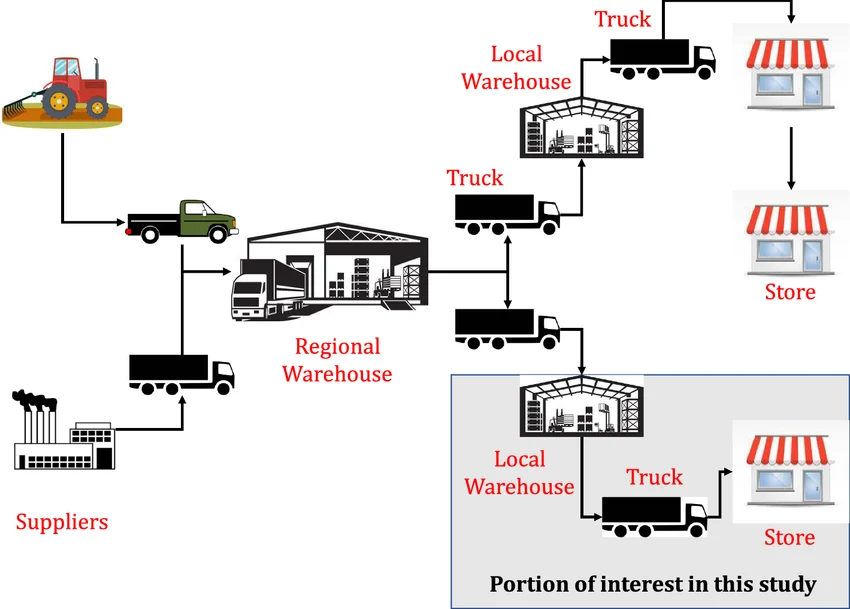
In multi-store retail, how inventory moves from the warehouse to stores is just as important as how much inventory is available. Poor distribution decisions often lead to stock-outs in high-demand locations and excess inventory in others.
A structured warehouse-to-store distribution approach ensures that inventory reaches the right stores at the right time.
The Problem with Reactive Distribution
Many retailers rely on manual requests or periodic dispatch cycles to move stock from warehouses. This often results in delays, inefficiencies, and uneven stock availability.
For example:
- High-performing stores may run out of fast-moving products
- Low-performing stores may continue receiving unnecessary stock
Without a clear distribution logic, inventory flow becomes inconsistent and difficult to control.
What Warehouse-to-Store Distribution Solves
A well-designed distribution system connects warehouse inventory directly with store-level demand. It ensures that dispatch decisions are not random but based on real data.
This allows teams to:
- Prioritize stores with higher demand
- Avoid over-supplying low-velocity locations
- Maintain balanced inventory across the network
How It Works
A modern distribution system typically:
- Tracks available stock at the warehouse
- Monitors store-level demand and sales velocity
- Generates dispatch recommendations for each store
- Aligns shipments with priority needs
Instead of bulk shipping, inventory is allocated with precision.
Key Benefits
1. Faster Replenishment
High-demand stores receive stock quickly, reducing lost sales.
2. Balanced Inventory Across Stores
Inventory is distributed based on actual need, not assumptions.
3. Reduced Manual Effort
Teams no longer need to coordinate distribution through spreadsheets or calls.
4. Improved Operational Efficiency
Warehouse dispatch becomes structured and predictable.
Why It Matters at Scale
As the number of stores increases, distribution complexity grows. Managing this manually becomes unsustainable.
A structured warehouse-to-store distribution process ensures:
- Consistency across locations
- Faster response to demand changes
- Better utilization of warehouse stock
Conclusion
Warehouse-to-store distribution is not just a logistics function—it is a critical part of inventory strategy. When done right, it ensures that stock flows efficiently across the network, supporting both sales and operational efficiency.
For retailers aiming to scale, a data-driven distribution approach is essential to maintain control and performance.